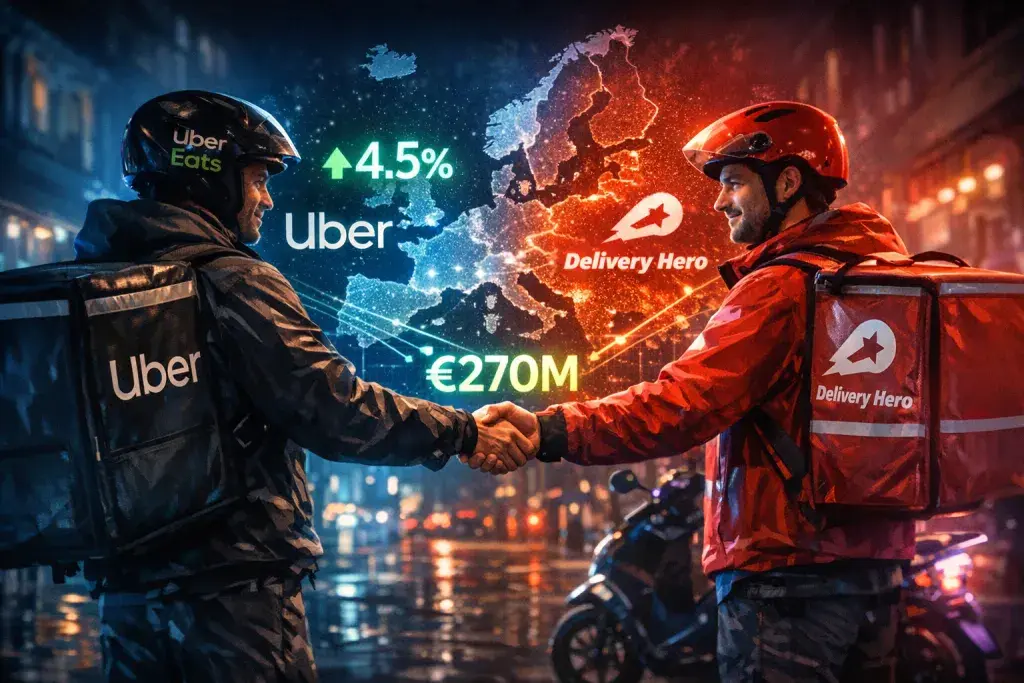
Uber has struck a deal to purchase an additional 4.5% stake in Delivery Hero for €270 million, buying shares at €20 each from the company's largest shareholder, Prosus. This transaction elevates Uber's ownership to about 7% and signals deepening U.S. involvement in Europe's competitive food delivery market. The move aligns with Uber's aggressive push into international expansion amid ongoing sector consolidation.
Strategic Sale Driven by EU Regulatory Pressures
Prosus, a Dutch investment group holding roughly 27% of Delivery Hero, sells the stake to meet EU competition rules linked to its €4.1 billion acquisition of Just Eat Takeaway. The European regulators require reductions in overlapping ownership to prevent market dominance. Prosus plans to trim its position to single digits by August 2026, exploring options like block sales and market sell-downs. Uber describes the purchase as opportunistic, securing shares at a slight discount to Thursday's €20.14 closing price, yet a 22% premium over the one-month average.
Uber's Broader Campaign in Global Delivery Markets
San Francisco-based Uber builds on its prior $300 million investment in Delivery Hero from May 2024. The company recently extended food delivery services to seven new countries, targeting growth beyond North America. This deal mirrors trends among U.S. players, such as DoorDash's £2.9 billion purchase of Deliveroo last year. Delivery Hero operates in 70 countries with brands like Talabat, Glovo, and Foodpanda, but faces shareholder scrutiny over performance. Activist investor Aspex Management, owning 9%, demands operational streamlining and asset sales, even threatening to oust CEO Niklas Östberg. Aspex has shown interest in Prosus's shares, though no deal exists yet.
Implications for Europe's Fragmented Delivery Landscape
The investment highlights U.S. firms capitalizing on European rivals' challenges, fostering cross-border alliances over outright takeovers. Uber gains influence in a key market without full acquisition costs, potentially aiding data sharing or coordinated expansions. For Delivery Hero, fresh capital from a major player could stabilize operations amid activist pressure. Yet it underscores vulnerabilities: Prosus's divestment reflects regulatory hurdles, while shareholder revolts expose profitability struggles in a high-competition sector. As consolidation accelerates, smaller operators risk marginalization, reshaping consumer access to on-demand services across the continent.